

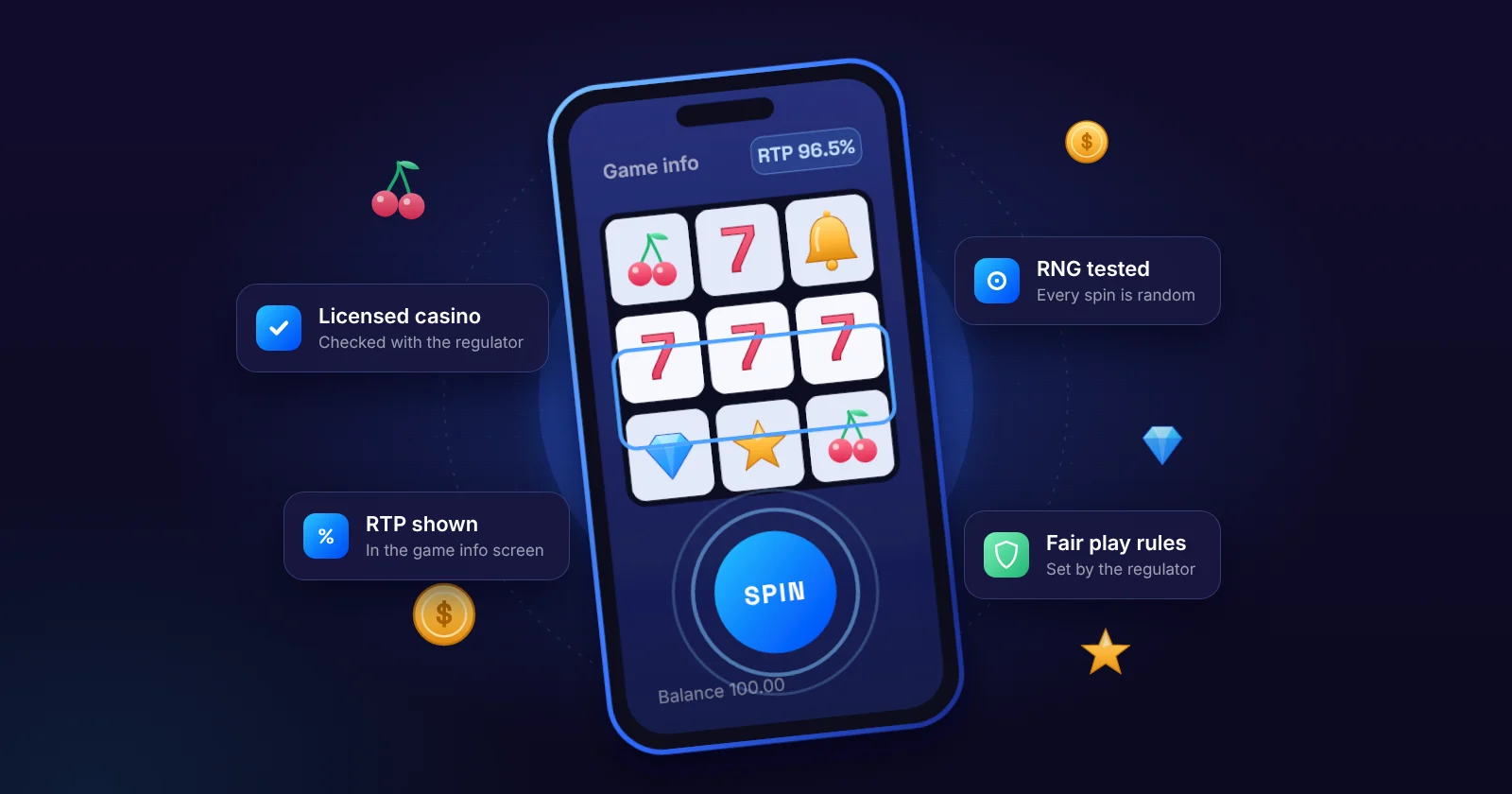
If you enjoy playing slots at land-based casinos but don't have one nearby, online slots might be interesting to you. But you may be wondering: are slot machines rigged, and can you trust online casinos? The answer depends on whether you're playing on a regulated platform. At a regulated casino, you have a real chance of winning money when you play slots online. At Betaro, we want you to know why these slots are legit, so this guide explains how popular games work behind the fun symbols and themes, and how to spot fake or rigged online slots.
Are Slot Machines Rigged? The Short Answer
No, online slots are not rigged when you're playing at a regulated or licensed casino. This is the part that matters most. Casinos that hold an official license, such as one from the New Jersey Division of Gaming Enforcement (DGE) or the Curaçao Gaming Authority (CGA), have to follow rules like these:
- Every game has to be tested and approved by an independent lab before it goes live.
- All digital slots run on certified RNG programs, so results are random.
So you don't have to worry about the fairness of the games on these platforms. In the US and Canada, players can also come across unregulated online casinos. We recommend not using them, as they don't have to follow any rules on game fairness or randomness. Some may still be fair, but the risk is usually not worth it when there are better options.
Which casino licenses can you trust?
Eight US states have legalized online casinos:
- New Jersey
- Pennsylvania
- Michigan
- West Virginia
- Connecticut
- Delaware
- Rhode Island
- Maine
Seven of them are already live. Maine's law took effect in July 2026, but its first online casinos aren't expected to open before 2027. Casinos in these states use strict geolocation checks, which means you can't place bets from outside the state.
Outside the US, online casinos are licensed by international regulators, and some licenses carry a lot more weight than others. These are the most trusted international casino licenses:
| Casino license | Regulatory strength | Country | Known for |
|---|---|---|---|
| MGA | High | Malta | Strict online casino oversight and strong player protection rules |
| CGA | Moderate | Curaçao | License rule enforcement and anti-money laundering (AML) checks |
| Gibraltar Gambling Commissioner | High | Gibraltar | Due diligence on business owners and oversight of fair and responsible gambling |
Whichever license a casino holds, always check that it is allowed to accept players where you live.
Are Slots Random?
Yes, for every practical purpose. Strictly speaking, slots use pseudo-random number generators (RNGs), which produce numbers from a formula rather than from pure chance. In a well-built game, though, that sequence is so long that it never repeats in practice, and nobody can predict the next number. So are slots random? For you as a player, every spin is.
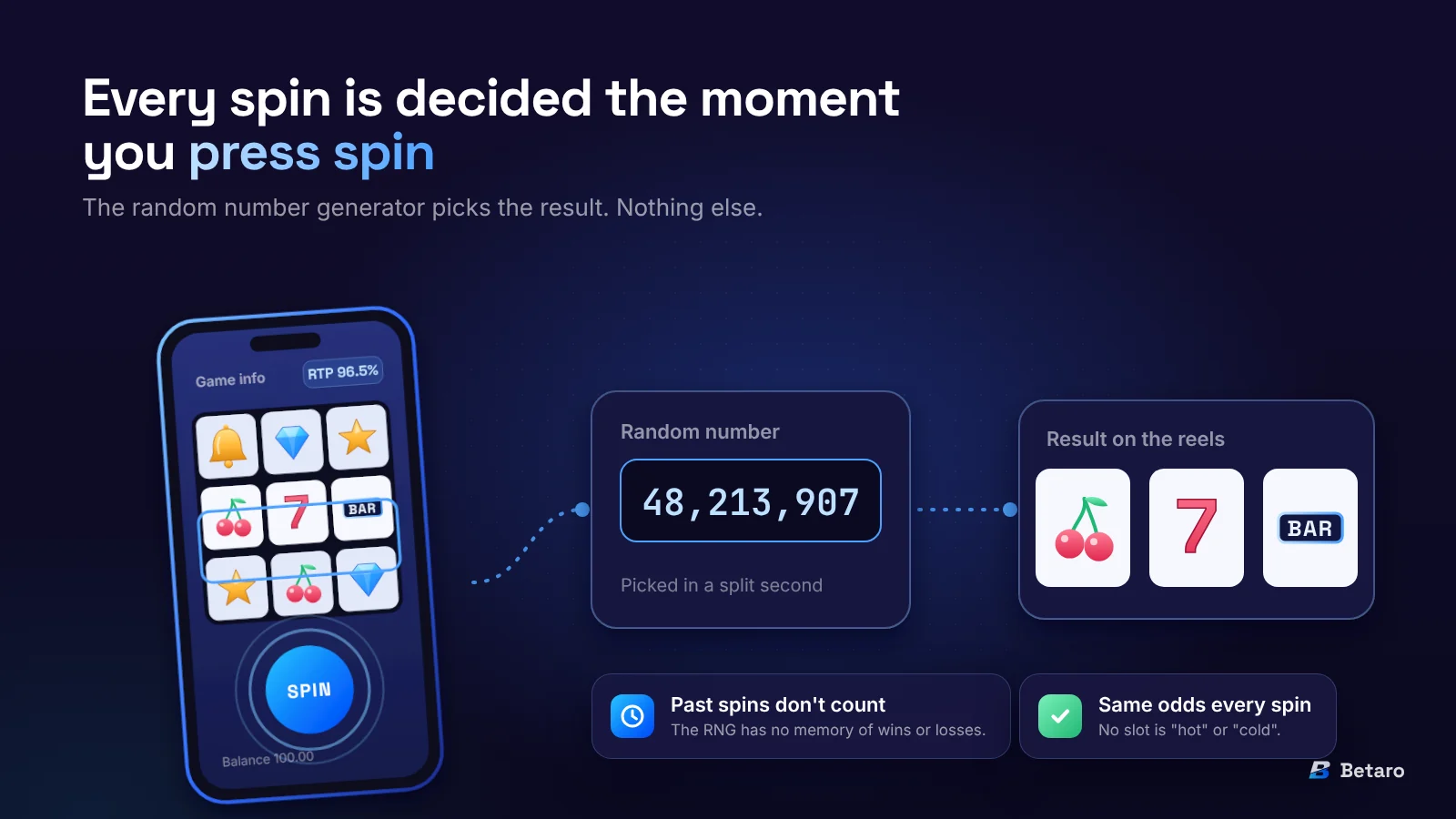
Online slots, and digital table games like poker, baccarat, roulette and blackjack, all use these RNG programs so that players can't predict the result of the next round. The result is decided the moment you press the spin button. The program doesn't care about past results and gives you the same chance of a win or a loss every time you play.
How do casinos prove their RNG software is fair?
Games from trusted studios, like Wanted Dead or a Wild by Hacksaw Gaming, run on certified RNG programs. Independent labs test them by running millions, sometimes billions, of simulated rounds to check that the results really are random. Below is the RTP note from the Wanted Dead or a Wild info screen, which says its 96.38% RTP was calculated by simulating 10 billion rounds.

Some of the best-known independent labs that test RNG software are:
- iTech Labs
- eCOGRA
- Gaming Laboratories International (GLI)
- BMM Testlabs
Licensed online casinos have to make sure every slot they offer carries one of these certifications, and regulators check regularly that the games stay compliant.
RTP, House Edge, and Why Slots Make You Lose
The saying "the house always wins" is true in the long run. You might get lucky and win big, but over time the casino comes out ahead, otherwise the business model wouldn't work. Every game has a small mathematical advantage for the casino built in. This is called the house edge, and the higher it is, the less you get back over time.
The RTP of a slot
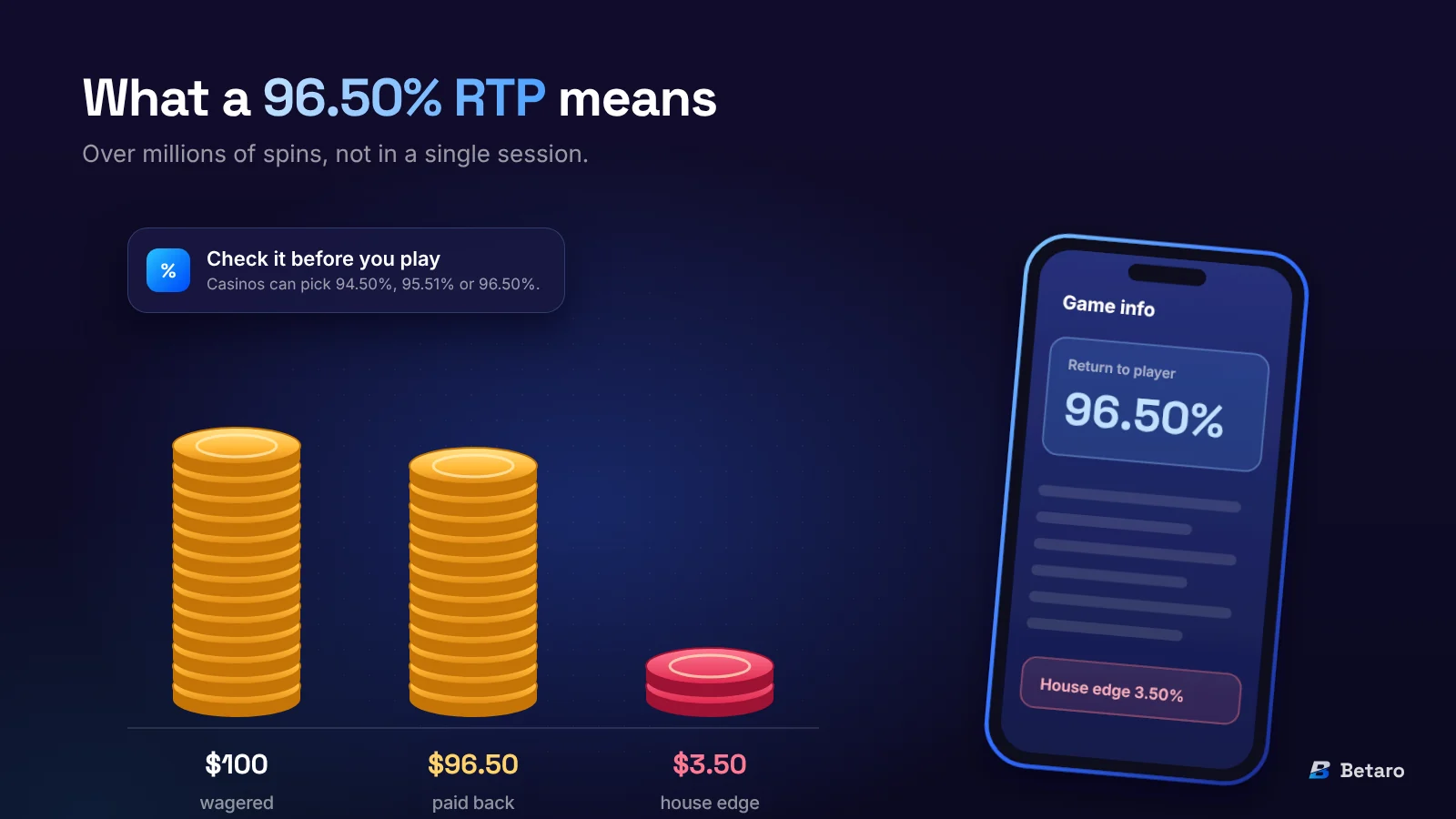
RTP stands for return to player and is shown as a percentage. It's a theoretical figure that shows how much a slot pays back per $100 wagered over millions of spins. So a slot with a 96% RTP will, in theory, pay back $96 for every $100 wagered. That doesn't mean you get $96 back from every $100 you bet. The winnings are spread across small and large payouts, like bonus wins and jackpots.
Studios like Pragmatic Play and Hacksaw Gaming often ship the same slot in several RTP versions. Gates of Olympus comes in 96.50%, 95.51% and 94.50% versions, and the casino chooses which one to offer. You can find the RTP in the slot's info screen before you place a bet.
House edge
You can work out the house edge of a game by subtracting its RTP from 100%. For Gates of Olympus at 96.50% RTP, the house edge is 3.5%.
Winning isn't guaranteed - here's what the real numbers say
RTP is a theoretical payout figure. It doesn't promise that you win back the RTP from every $100 you wager. At Betaro, we tracked 255,670 real bets on Gates of Olympus across 17 online casinos in the 30 days to October 25, 2026. Here is how those bets paid out:
| Result | Bets | Share of bets |
|---|---|---|
| Paid back less than the stake | 172,600 | 67.5% |
| 1x to 2x the stake | 24,839 | 9.7% |
| 2x to 10x | 37,782 | 14.8% |
| 10x to 100x | 17,472 | 6.8% |
| 100x to 1,000x | 2,916 | 1.1% |
| 1,000x and up | 61 | <0.1% |
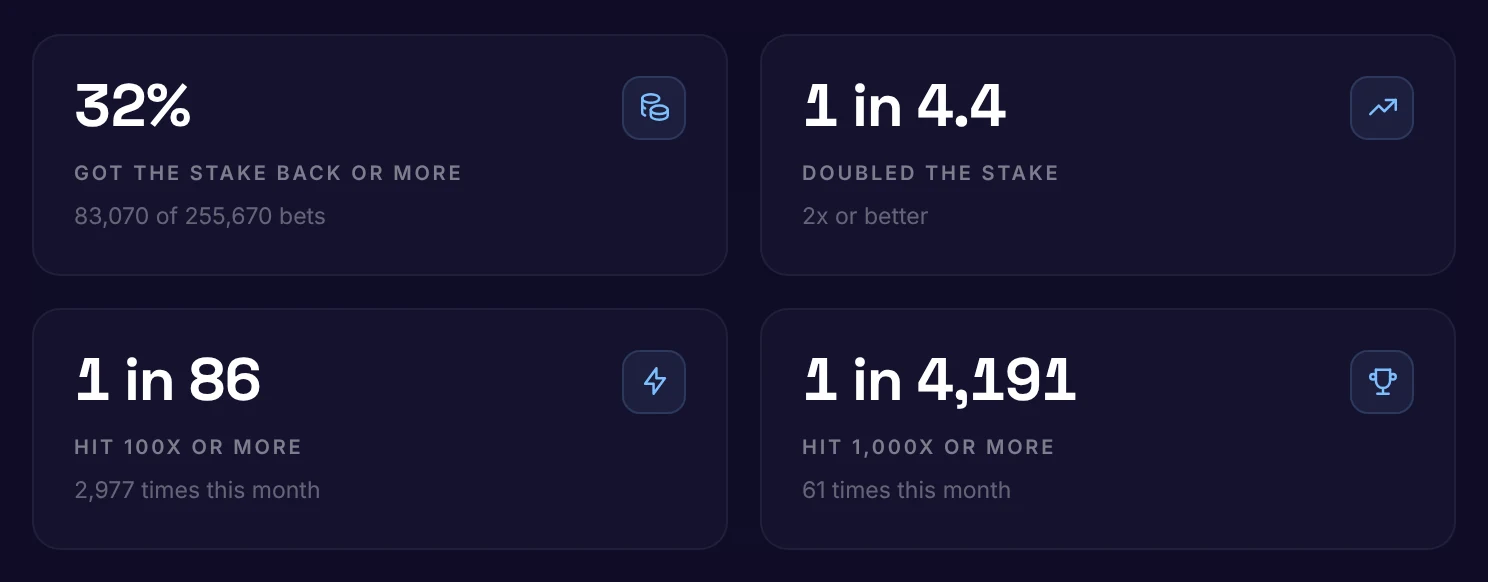
So keep in mind that every spin can lose you money. RNG programs don't take past results into account, which also means there is no such thing as a "hot" or "cold" slot. Believing in streaks is one of the biggest traps gamblers fall for.
Are Online Slots Rigged? How to Check If an Online Slot Is Fair
If you're wondering whether online slots are rigged, there are several things you can check before you play or deposit money. None of them can guarantee that a game or casino is trustworthy, but together they help you make a more informed decision:
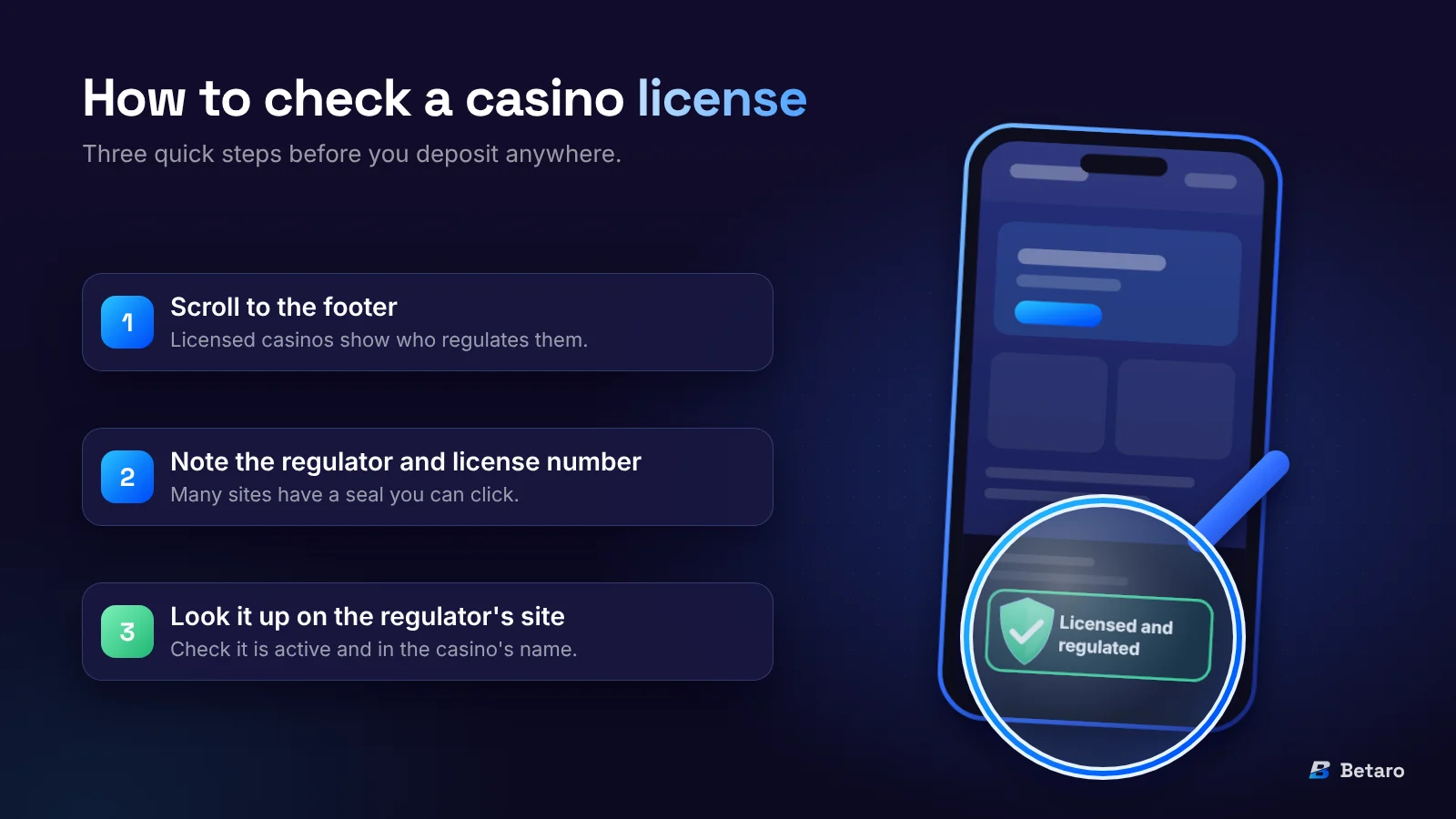
- Verify the casino's license with the regulator that issued it.
- Check who made the game and read its published rules.
- Look up the RTP in the game's info screen.
- Look for testing or certification details.
- Read the casino's terms and withdrawal conditions.
- Try the game first in a free demo here at Betaro.
Warning signs of an untrustworthy online casino
Some international sites offer gambling without an active license from a trusted regulator, or aren't open about their games, RTP and payouts. Watch out for:
- No license, or a license you can't verify with the regulator.
- No RTP shown in the game info screens.
- Unclear or missing withdrawal terms.
- Games with no named studio behind them.
These signs don't prove that a casino's slots are rigged, but it's best to avoid these sites so you don't lose money in an unfair way.
Are Physical Slots Different From Online Slot Machines?
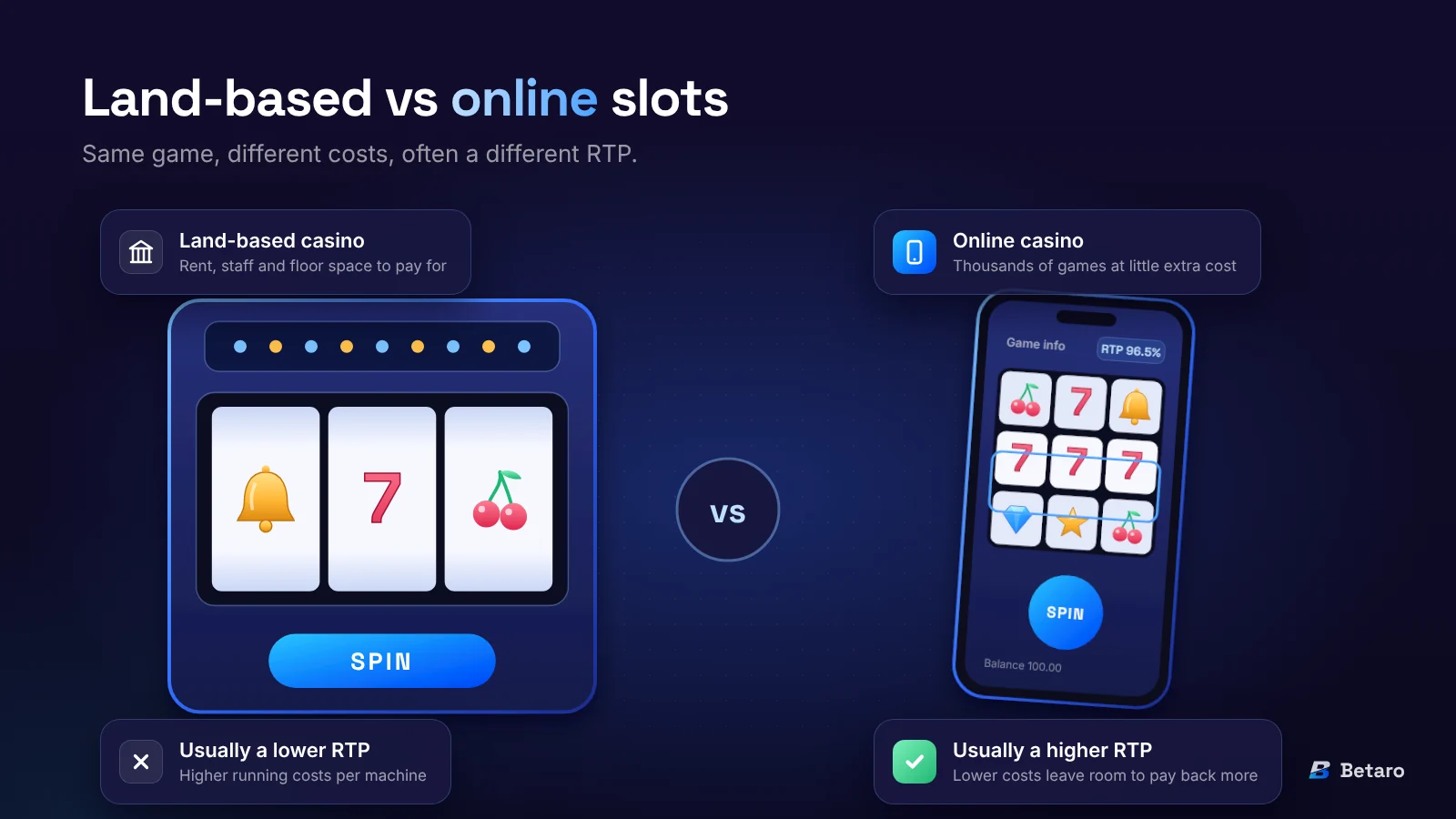
Yes, there are differences between physical and online slots, even when it's the same game. It mostly comes down to RTP. Most slots in a land-based casino pay back less than their online versions, mainly because physical casinos cost more to run. An online casino can offer thousands of slots without its costs going up, so it can afford higher RTPs. A physical casino has limited floor space and has to pay for staff, rent and everything else it takes to keep the doors open.
Expert Verdict: Can You Trust Online Slot Machines?
If you play online slots on regulated platforms, then yes, you can trust the games. But don't go in expecting to win a set amount. Casinos are designed to make money in the long run. That's why I recommend only playing with money you're willing to lose, and seeing it as money spent on a night out. That way you can enjoy the games for what they are, and if you're very lucky, you'll walk away with a nice win. If you're playing on a limited budget, try some low-volatility slots and choose lower bets to make your bankroll last longer.
Slots mentioned in this post
Real-money gambling always carries risk, so only play with money you can afford to lose. Where a post uses Betaro data, our methodology page explains where the numbers come from.